
 Stand out with an award-winning
In today’s competitive talent market, employer reputation management strategies play a bigger role in recruiting success than ever before. Let’s be honest: your brand isn’t what’s written on the lobby wall or tucked away in an employee handbook. It’s the conversation happening in the breakroom, the “vibe” during a Zoom call, and, increasingly, the reviews candidates read before they even consider hitting “apply.”
For HR leaders and CHROs, that means managing your reputation is a strategic talent priority. If you aren’t actively shaping your employer brand reputation, the internet is more than happy to do it for you, and if you don’t know where to start, you’re in the right place.
Here are eight easy-to-apply strategies to improve your employer reputation. Ready? Class is in session.
Key takeaways
- Employer reputation directly impacts your ability to attract talent.
- Candidates trust employee voices more than employer branding messages.
- Strong employer brands help you recruit and retain better people.
- Employer recognition (like Top Workplaces awards) builds trust and visibility.
Why employer reputation is your most valuable asset
Your talent pipeline is a mirror. It reflects exactly how the world perceives your culture. Every candidate interaction, employee review, or social media post contributes to how your workplace is seen to the world.
When that reflection is bright, everything goes smoothly. When it’s dim, even the best recruitment technology won’t make recruiting the right candidates as easy of a process.
You may be asking, “What do we mean by this?” We’ll explain.
In many cases, perception determines whether someone chooses to apply, accept an offer, or recommend your company to others.
On the flip side, a weak reputation can quietly undermine recruiting efforts, leading candidates to hesitate to apply, top performers to leave sooner, and employees to become less likely to advocate for the company publicly.
So you see, improving your employer reputation doesn’t stop at improving your image. It goes beyond that, and ultimately lies in improving the employee experience itself.
Now that you know the breakdown behind the “why,” let’s jump into “how?”
Eight proven steps to improve your employer reputation
Step 1: Listen (like you mean it)
Improving your employer reputation starts from the inside out.
The most credible employer brands are built from real employee experiences, and to know your employee experiences, you have to listen.
Really listen.
This is achieved through employee listening programs, such as third-party engagement surveys, pulse surveys, and feedback tools. These all work together to help organizations get the unfiltered truth about what their employees actually think about their workplace.
Anonymous third-party surveys are invaluable because they bring to the surface “hidden gems,” AKA opportunities for improvement you might not see otherwise.
Not only does listening build trust amongst your employees, but it also signals that leadership values their employees’ voices and is willing to act on that feedback. When employees feel heard, they’re more likely to become advocates for the organization, which is the first way to strengthen employer reputation organically.
Step 2: Turn your employee insights into a "culture story"
The employee sentiment insights gathered through Step 1 shouldn’t live and die in an HR dashboard. Instead, use the insights to leverage your organization’s brand story.
Forget the polished scripts and focus on telling stories of growth, resilience, and/or daily wins. When candidates see real employee experiences reflected in your messaging, it strengthens two things: credibility and trust.
The next time you deploy a third-party survey, take the employee feedback and weave it into a narrative fit to share through blogs, career pages, social posts, or recruiting materials, and see the difference.
Step 3: Give candidates a reason to believe you
We all trust recommendations more than sales pitches.
Employer recognition awards are a valuable third-party validation of your workplace culture. Those based on real employee feedback are even more credible, showing that your culture claims are supported by actual employee experiences — and that earning external recognition, like Top Workplaces awards, provides proof rather than promises.
The awards do more than improve employer branding externally. They also boost internal morale and reinforce pride in the organization — two factors that directly support employee retention and engagement.
Step 4: Lead the culture conversation
Leadership credibility plays a major role in how employees and candidates perceive your employer brand. When CHROs and executives are vocal about culture, it signals that their people are their priority.
Visible leadership commitment might include:
- Sharing employee success stories.
- Participating in employee forums or listening sessions.
- Communicating progress on culture initiatives.
- Recognizing employee contributions publicly.
When leadership is vocal about all of the above, know this: the market notices.
Step 5: Make your managers brand ambassadors
Managers have one of the greatest influences on employee experience. They shape their day-to-day, reinforce organizational values, and directly affect employee engagement. When managers consistently model positive behaviors, they help strengthen the culture that employees talk about outside the workplace.
But if your managers aren’t aligned with your values, your employer brand strategy will fall apart at the desk level. Give your managers the tools they need by investing in:
- Manager training and leadership development
- Communication and feedback
- Culture and values alignment
Your culture lives (or dies) with your managers. It may seem dramatic, but look at it this way. You can spend thousands on a brand refresh, but if a manager is toxic in a 1:1, that investment evaporates.
A major piece of your employer brand is how your managers make your employees feel on a random Thursday. Investing in managers is investing in brand insurance. It’s the only way to ensure the brand promise you make at the executive level is the same one delivered every 1:1.
Step 6: Be transparent
Today’s candidates expect honesty about what it’s really like to work at an organization. Be transparent about what your workplace is really like — challenges included. Overly polished messaging can quickly lose credibility if it doesn’t match real employee experiences.
Instead of trying to present a perfect workplace, focus on sharing authentic insights into your employee experience. Why? Because transparency builds trust with candidates, and trust is one of the strongest drivers of employer reputation.
Step 7: Show up consistently (everywhere)
A candidate’s journey is rarely a straight line. They might see a job post, check your LinkedIn, and then browse your “About Us” page. Is your voice the same across all your social media channels?
And it’s not just social media. Today’s job candidates are looking to AI to learn about your company and its culture. Do you know what AI says about your employer reputation?
If not, some changes are in order to ensure your brand messaging is consistent. Consistency reinforces credibility, and credibility is currency that appeals to candidates.
Step 8: Encourage employee advocacy
The last tip to improve employer branding is a full circle to the first.
One of the most powerful drivers of employer reputation is (you guessed it) employee advocacy. When employees voluntarily share their experiences by recommending the company or publicly celebrating workplace achievements, they create authentic signals of trust.
Candidates trust employees more than corporate messaging. When employees speak positively about their workplace, it will strengthen your employer’s reputation much more than any traditional marketing.
So, what’s the gist?
Turn your culture into a recruiting advantage
When employee experiences align with employer branding efforts, reputation becomes a powerful recruiting advantage.
A strong employer reputation helps:
- Attract top talent
- Improve candidate trust and engagement
- Strengthen employee retention
- Support long-term employer branding efforts.
Here’s the biggest takeaway we want you to remember from today’s class:
Employer reputation is built from the inside out
Organizations that invest in employee listening, alignment in leadership, and authentic culture storytelling create reputations that naturally attract top talent. When you focus on the human side of the business, you create a brand that doesn’t just attract talent — it keeps it.
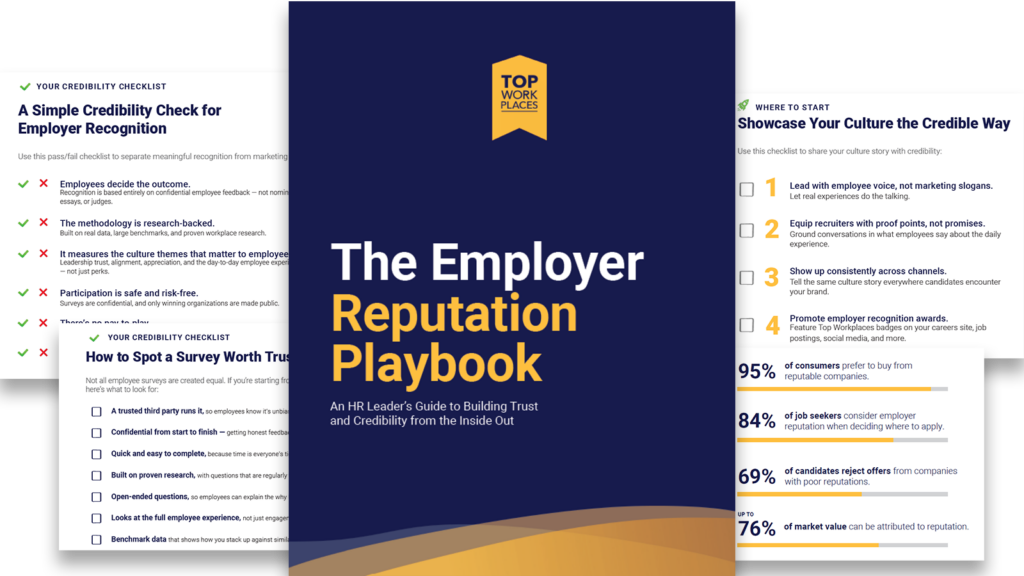
See where your brand stands — and start building a culture that speaks for itself
Frequently asked questions
Employer reputation is how job seekers and employees perceive your company as a place to work, based on culture, leadership, and employee experience.
A strong employer reputation attracts more qualified candidates, increases trust, and helps convert applicants into hires more quickly.
Organizations can improve their reputation by listening to employee feedback, strengthening workplace culture, communicating authentically, and earning credible employer recognition.
Employee feedback provides insight into the real workplace experience and helps organizations identify strengths to highlight and areas to improve.
Employer recognition programs, like Top Workplaces awards, validate your culture through third-party credibility and increase visibility with job seekers.